How to teach pressing in youth football: from pairs to the whole team
By Marco Baleato · · About the author
Many youth teams “press” by having everyone run at the ball. It looks intense for five minutes, then the opponent finds the free player and the team is broken. Pressing is something you teach step by step: first one player, then a pair, then the whole block reacting to the same signal.
This guide follows that order, with a drill for each step that you can open, adapt and add to your session.
Step 1: the first defender
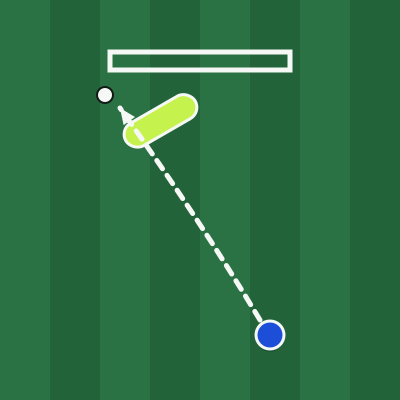
The player who goes to the ball does not run straight at it. They curve the run to cut one passing line and push the ball to one side, slow down before arriving, and stay on their feet. If the first defender arrives fast and dives in, everything behind them fails.
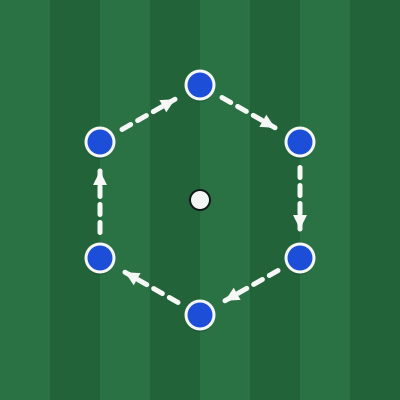
Rondos are the easiest place to start. In a 4v2 the defender who presses learns to close the pass along the line while the partner covers the diagonal through the middle.
Step 2: press as a pair, then as three
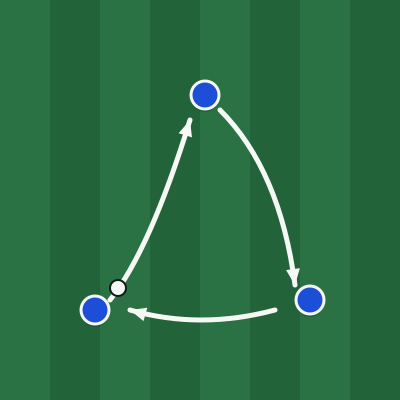
When the ball moves, the roles swap: the new closest player presses and the other one covers. Say it out loud in every rep (“I go, you cover”) until it becomes automatic.
The next step is a group of three or four pressing a team that has more players. In the 8v4 three-team game one team presses for 90 seconds without stopping: one player goes, the nearest ones close the short passes, and the far player protects the switch.
Step 3: when to press
A team cannot press for a whole match. It waits, and jumps together when a signal appears. Teach three simple pressing triggers: a pass to the full-back near the touchline, a bad first touch, and a player who receives with their back to goal.
In the 6v4 pressing triggers drill the four forwards wait until one of those signals and then jump at the same time. In the 8v8 games the whole team learns to wait in a compact mid block and go only on the signal.
What to train at each age
U9–U10: chasing games and 1v1 duels. Teach them to stay on their feet and to steer the attacker, not yet to press as a team.
U11–U12: pressing in pairs and the reaction after losing the ball. Keep it short and competitive, with points for winning the ball back.
U13 and older: pressing triggers, the mid block and the distances between lines. Now it is a team plan, so connect every drill to how you want to defend on Saturday.
Common mistakes
Pressing without cover: one player goes and nobody closes the pass behind them. Pressing too late: the signal appears, but the team arrives two seconds later. And blocks that are too long: pressing is intense, so work in 2–3 minute sets and let players recover.
In the session planner you can choose pressing as the tactical objective and it suggests the tasks that fit your players and age group.