Passing drills for football training: patterns, games and how to choose
By Marco Baleato · · About the author
Every coach does passing drills, but not all of them improve passing in a match. A good passing drill has three things: many touches per player, a receiver who moves to receive, and a reason to look up before the ball arrives.
There are two main families. Passing patterns, without opponents, give rhythm and quality. Passing games add opponents and decisions. You need both, in that order.
Passing patterns
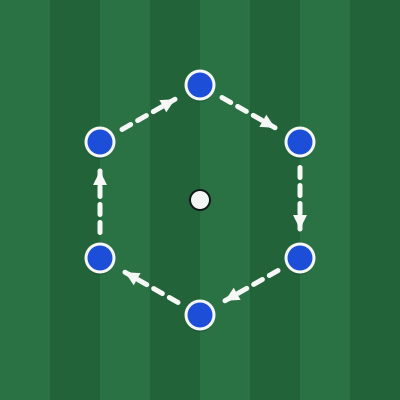
Start with pass and follow: the player passes and runs to the position they passed to, so everyone keeps moving. The diamond is the classic shape for young players because they have to receive with an open body and play in a different direction each time.
From U11–U12, the Y-shape adds the most useful combination in football: the third-man run. A passes to B, B lays it off, and A plays forward to C, who moved while the ball was travelling.
Passing games
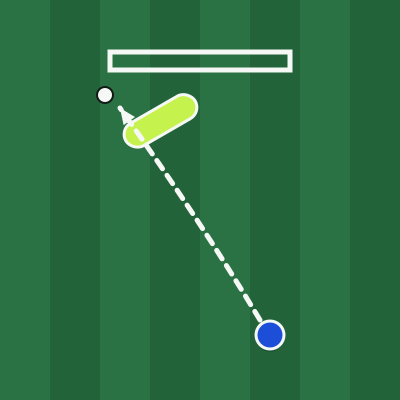
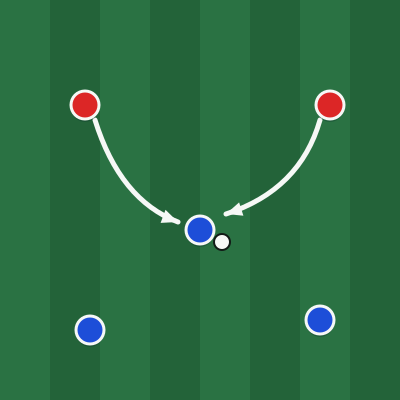
Once the technique is there, add traffic and opponents. In pairs passing through traffic, the passer has to find a free line and the receiver has to move to create it. In the passing gates game every pair tries to pass through as many gates as possible, so they have to look up all the time.
With older players, use a drill where the pass has to break a line of defenders: the receiver waits behind the line, and the passer waits for the gap.
By age
U7–U10: inside-foot pass with a clear target. Football bowling and passing through gates work better than lines of players waiting their turn.
U11–U14: receive on the move, pass and follow, wall passes and the first third-man patterns.
U15 and older: tempo and weight of pass, driven passes into the striker and long diagonal switches.
What to correct
Correct one thing at a time: the supporting foot pointing where the ball goes, the first touch out of the feet, the body open to see the next pass, and the weight of the pass (to the front foot of a moving receiver).
Keep groups small. With more than four players per pattern, most of the time is spent waiting. Two patterns side by side are better than one long line.