Set pieces in grassroots football: throw-ins, corners and free kicks
By Marco Baleato · · About the author
A match has dozens of restarts: throw-ins, corners, free kicks, goal kicks. Many teams train them very little, so they lose the ball after their own throw-in or concede from corners without knowing why.
You do not need complicated routines. A few simple ideas, trained in short blocks, are enough to make the most of them.
Throw-ins: the most frequent restart
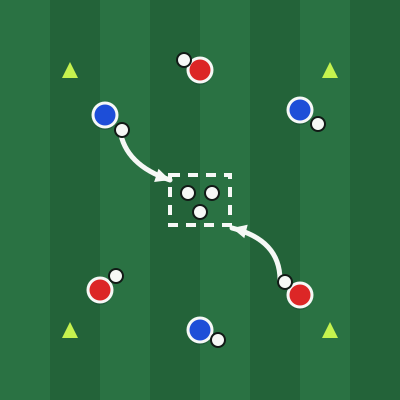
With the youngest players, first the technique: both feet on the ground, ball from behind the head. Then the most important idea: the receiver moves away and comes back to create space, and the thrower steps onto the pitch straight away to receive again.
From U11, use simple combinations: a run in behind for the throw down the line, a lay-off to the thrower, a swap of positions to lose the marker.
Corners: two or three options are enough
A short corner to create a better angle for the cross. A near-post run with a flick-on for a teammate arriving at the far post. And a direct delivery to the area where your best header attacks the ball.
Do not train ten routines: train two well, so that each player knows exactly where to go.
Defending corners and wide free kicks
Decide the system (zonal, man-marking or mixed) and make sure everybody knows their job: who covers the near post, who marks the most dangerous header, who stays out for the second ball and the counter-attack.
Mixed marking is a good option from U13 upwards: a few players in zones protect the key spaces and the rest mark the most dangerous opponents.
Train them in a game
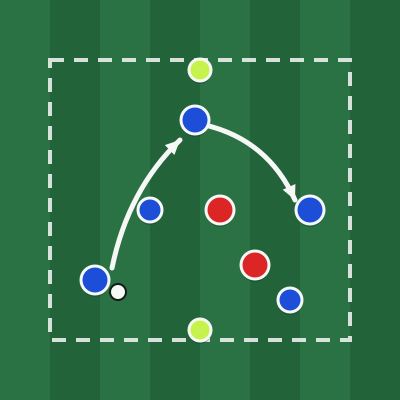
For U9–U12, a game where every restart is a chance is the most fun way: each throw-in, corner and free kick close to the box counts as an opportunity, and players learn to take them quickly and with intention.
With older teams, 10–15 minutes at the end of the session before the match is usually enough.