Transitions: how to train the seconds after winning or losing the ball
By Marco Baleato · · About the author
A large share of goals come from the seconds right after the ball changes team. The team that has just lost it is out of shape; the team that has just won it has space. Whoever reacts first usually wins that moment.
Transitions are trained with tasks where the ball changes team constantly and where that change has a consequence. This post explains what to look for in each one.
Attacking transition: after winning the ball
First look forward: if there is a pass behind the defence, it is now. If not, secure the ball by getting it out of the pressure zone and then attack.
The players without the ball run immediately: one in depth, others in width. A counter-attack with only the ball carrier is easy to stop.
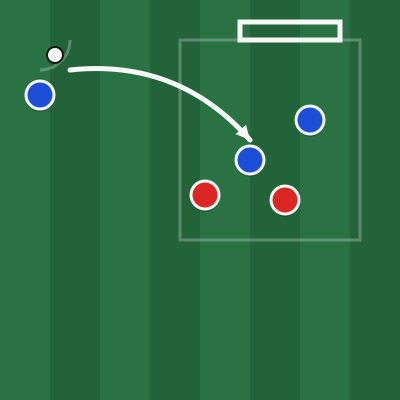
Decide quickly in the superiority: in a 3v2 or 2v1, fix the defender and pass at the right moment.
Defensive transition: after losing the ball
Two options, and the team has to know which one to choose: press immediately to win it back (when there are players close and the opponent is still under pressure) or drop back to protect the goal (when the opponent can play forward).
The player who lost the ball reacts first; the ones furthest away run back towards the centre to close the inside.
Tasks by age
U9–U12: continuous 2v1 waves, where the defender becomes the attacker in the next round. Simple and with a lot of repetition.
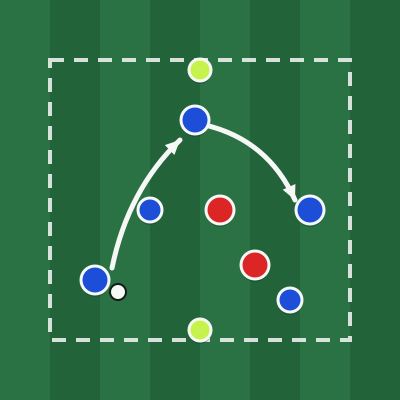
U11–U16: 3v2 that becomes 2v1 in the other direction, and 4v4 games where a goal after winning the ball counts double.
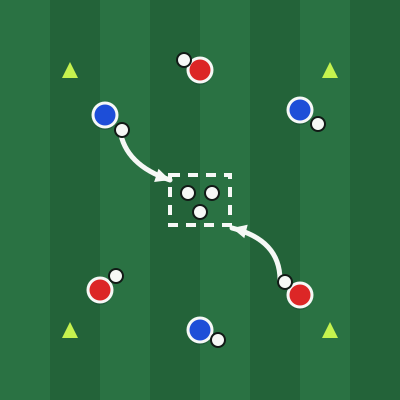
U15 and older: rondos with transition to a second square and possession games where losing the ball forces the team to defend straight away.
Organisation
Transition tasks need intensity: short blocks, quick restarts with a ball from the coach, and few stops. If the players walk to restart, the task is no longer training transitions.