Dribbling drills for kids: games that build confident players
By Marco Baleato · · About the author
Young players who are comfortable with the ball enjoy football more and make better decisions later. That comfort comes from touches: hundreds of them, in every session, with a ball per player whenever possible.
The best dribbling drills for kids are games. A slalom through cones with a queue of eight children gives each one a few touches; a game with a ball each gives them hundreds.
Ball mastery: a ball each
Start the session with a ball mastery grid: the coach names a skill (sole rolls, inside-outside, drag-backs), shows it quickly and everyone repeats it while moving. Ten minutes are enough for hundreds of touches.
For the youngest, use a story. In traffic lights, green is dribble, amber is slow down, red is stop the ball. They learn to listen and react while they work on running with the ball.
Look up while dribbling
Dribbling with the head down is the most common problem. Games with many gates and other players force them to look up: in the gates game each child dribbles through as many gates as possible without crashing into a teammate.
Cross the river adds defenders: everyone attacks at the same time, so the crocodiles cannot mark everybody and the dribblers have to choose the moment and the gap.
Feints and 1v1s
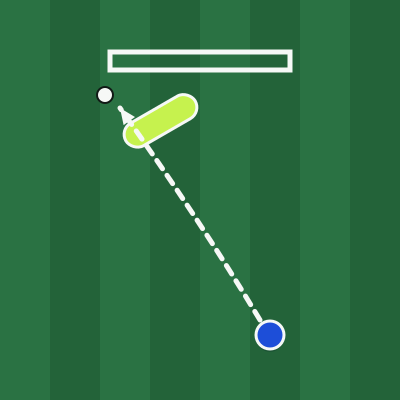
A feint only works if the attacker sells it and then accelerates. Mannequins let players practise one move at speed with many repetitions. Teach one move per mannequin and change them every few minutes.
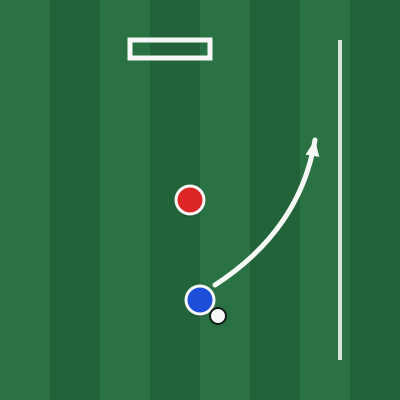
Then take it to a duel. In the 1v1 gates game the attacker always has a free gate to choose, so the duel is about reading the defender and changing direction. In king of the square everyone protects their ball while trying to knock out someone else's.
Keep dribbling as they grow
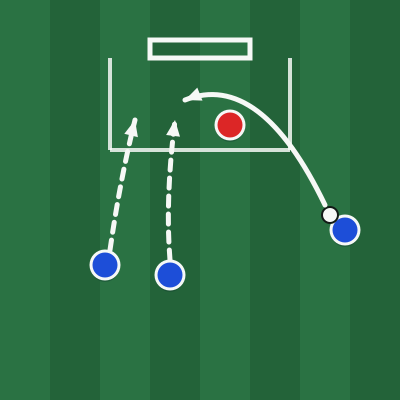
From U11–U12 many players stop dribbling because passing always seems safer. Games where passes can only go sideways or back, like the 3v3 dribble game, make dribbling the only way forward again.
Do not punish losing the ball in these games. A player who tries ten dribbles and loses six is learning more than one who never tries.