Defending drills: from the 1v1 to defending as a back line
By Marco Baleato · · About the author
Defending is often treated as effort: “get stuck in”. But defending can be taught, and young players learn it faster when you split it into steps: the individual duel, the pair, and the line.
In each step the question is the same: where do I stand, when do I go, and who covers me.
The individual duel
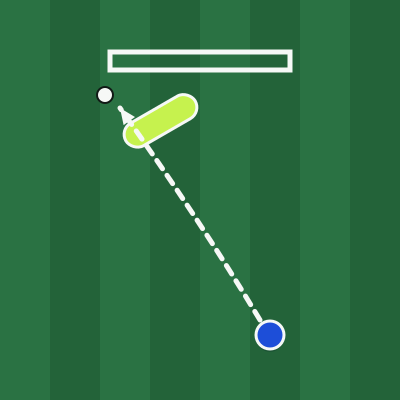
Close the distance while the ball is travelling, slow down before arriving, get side-on and steer the attacker towards the touchline. A narrow channel makes it real but manageable.
Then the tackle: wait side-on and go in when the attacker's touch takes the ball away from their foot. Train it at low speed first, so the technique stays clean. Shadow jockeying, without a ball, builds the footwork.
Wide and outnumbered
Wide, the priority is to stop the attacker cutting inside. Show them outside, where the cross is less dangerous and the touchline helps.
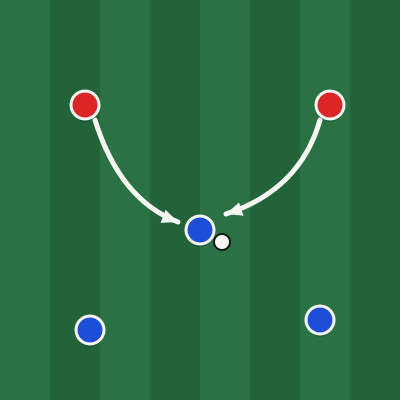
When it is 2v1, the defender should not go to the ball straight away. Drop back facing the ball, stand between the two attackers to make the pass harder, and only go in when the ball carrier takes the ball too far. The goal is to delay until help arrives.
Press and cover
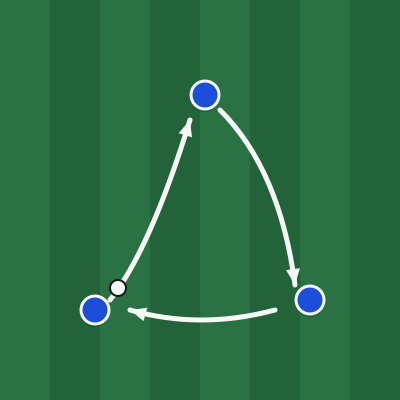
The basic unit of team defending is two players: one presses, the other covers at an angle behind them, close enough to help but not so close that one pass beats both. In a 2v2 to gates, the roles swap every time the ball moves.
With three defenders and four attackers, nobody can mark everyone: they must decide who presses, who covers and which gate they leave free.
Defending as a line
From U13–U14 the back line works as a unit: the closest defender presses, the others shift across and tuck in, and the far side is left open on purpose. Vertical lanes make compactness visible: if a defender is two lanes away from the ball, the team is split.
Keep these drills short and finish with a game, so defenders apply the same ideas against a real opponent.